Home Status

Education modules

🎓 Coming soon. The Education module is offline while we rework it. This page stays for reference only.

The curriculum is designed (21 missions) and the learning system behind it is in development. No learners are enrolled yet, and the education app is not open to the public in this R&D preview.
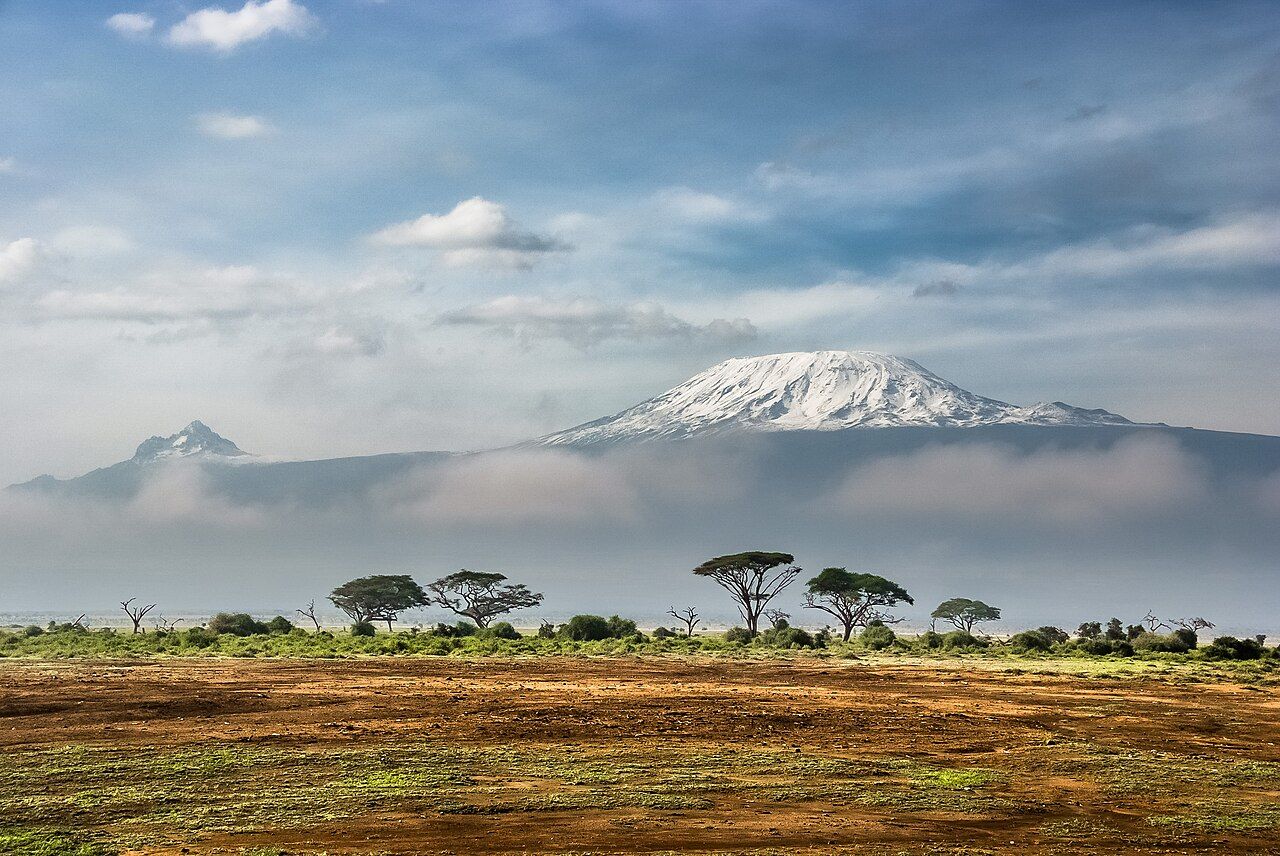
Mount Kilimanjaro seen from Amboseli in Kenya: the snow-capped summit rises above a thick band of cloud over a dry brown savanna with a few flat-topped acacia trees in the foreground.
Mount Kilimanjaro seen across the savanna from Amboseli, Kenya.Credit: Sergey Pesterev, via Wikimedia Commons. Licence: CC BY-SA 4.0. Source.
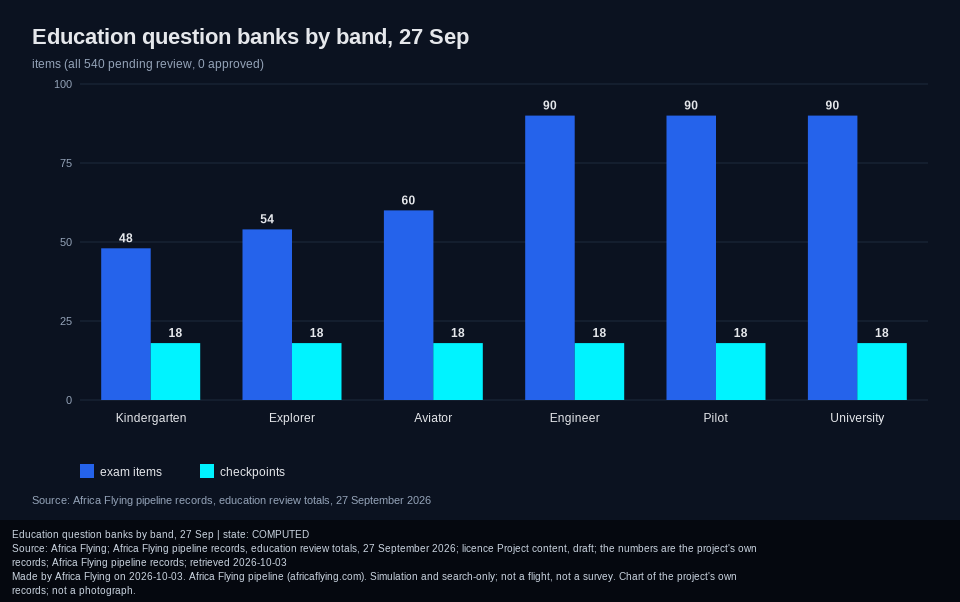
Grouped bar chart of education question banks in six bands. Exam items: Kindergarten 48, Explorer 54, Aviator 60, Engineer 90, Pilot 90, University 90. Checkpoints: 18 in every band.
Education question banks by band, 27 SepCredit: Africa Flying. Licence: Project content, draft; the numbers are the project's own records. Source: Africa Flying pipeline records, 3 Oct 2026.
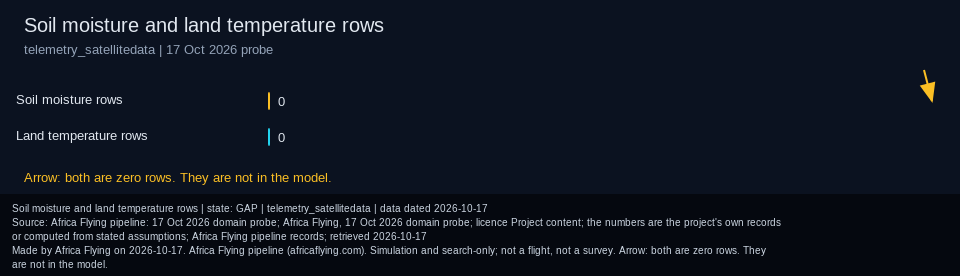
Soil moisture and land temperature rows. Values: Soil moisture rows 0, Land temperature rows 0. Arrow: both are zero rows. They are not in the model.
Soil moisture and land temperature rows. Arrow: both are zero rows. They are not in the model.Credit: Africa Flying pipeline: 17 Oct 2026 domain probe. Licence: Project content; the numbers are the project's own records or computed from stated assumptions. Source: Africa Flying pipeline records, 17 Oct 2026.
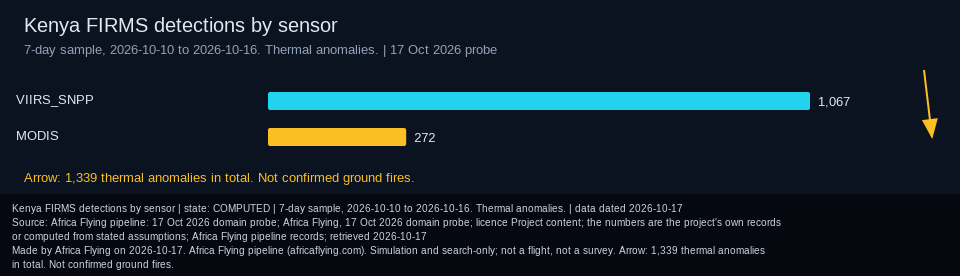
Kenya FIRMS detections by sensor. Values: VIIRS_SNPP 1,067, MODIS 272. Arrow: 1,339 thermal anomalies in total. Not confirmed ground fires.
Kenya FIRMS detections by sensor. Arrow: 1,339 thermal anomalies in total. Not confirmed ground fires.Credit: Africa Flying pipeline: 17 Oct 2026 domain probe. Licence: Project content; the numbers are the project's own records or computed from stated assumptions. Source: Africa Flying pipeline records, 17 Oct 2026.

Pictures in the modules

Real, openly licensed pictures only, each with its credit and licence. Subjects with no fitting real picture have none. Nothing here is generated.
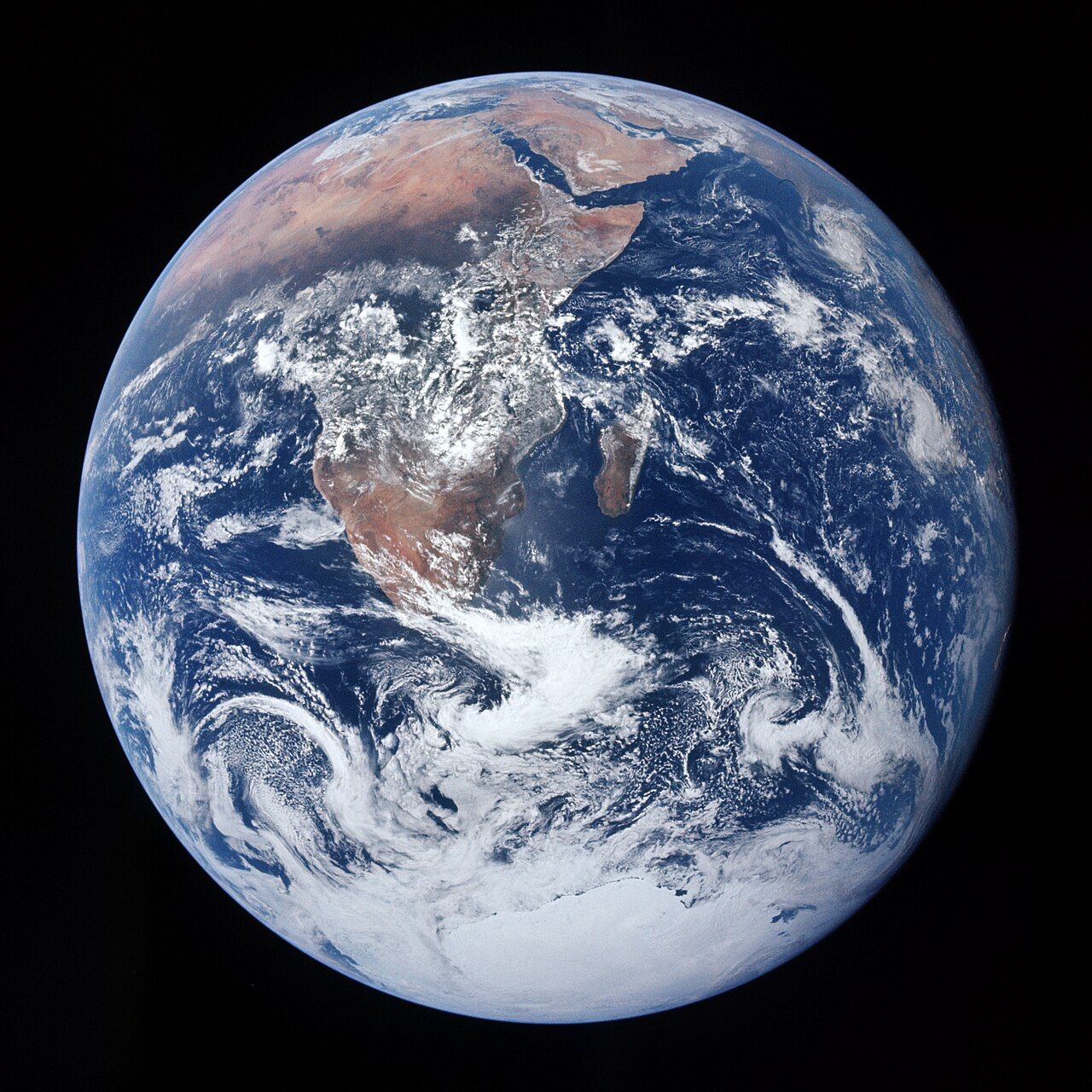
The Earth photographed from Apollo 17 on 7 December 1972: Africa fills the centre of the disc with Madagascar to the south-east and Antarctic ice at the bottom, under swirling white cloud.
Africa from Apollo 17, 7 December 1972. Used in: GEO, SST.Credit: Harrison Schmitt / Apollo 17, via Wikimedia Commons. Licence: Public domain. Source.
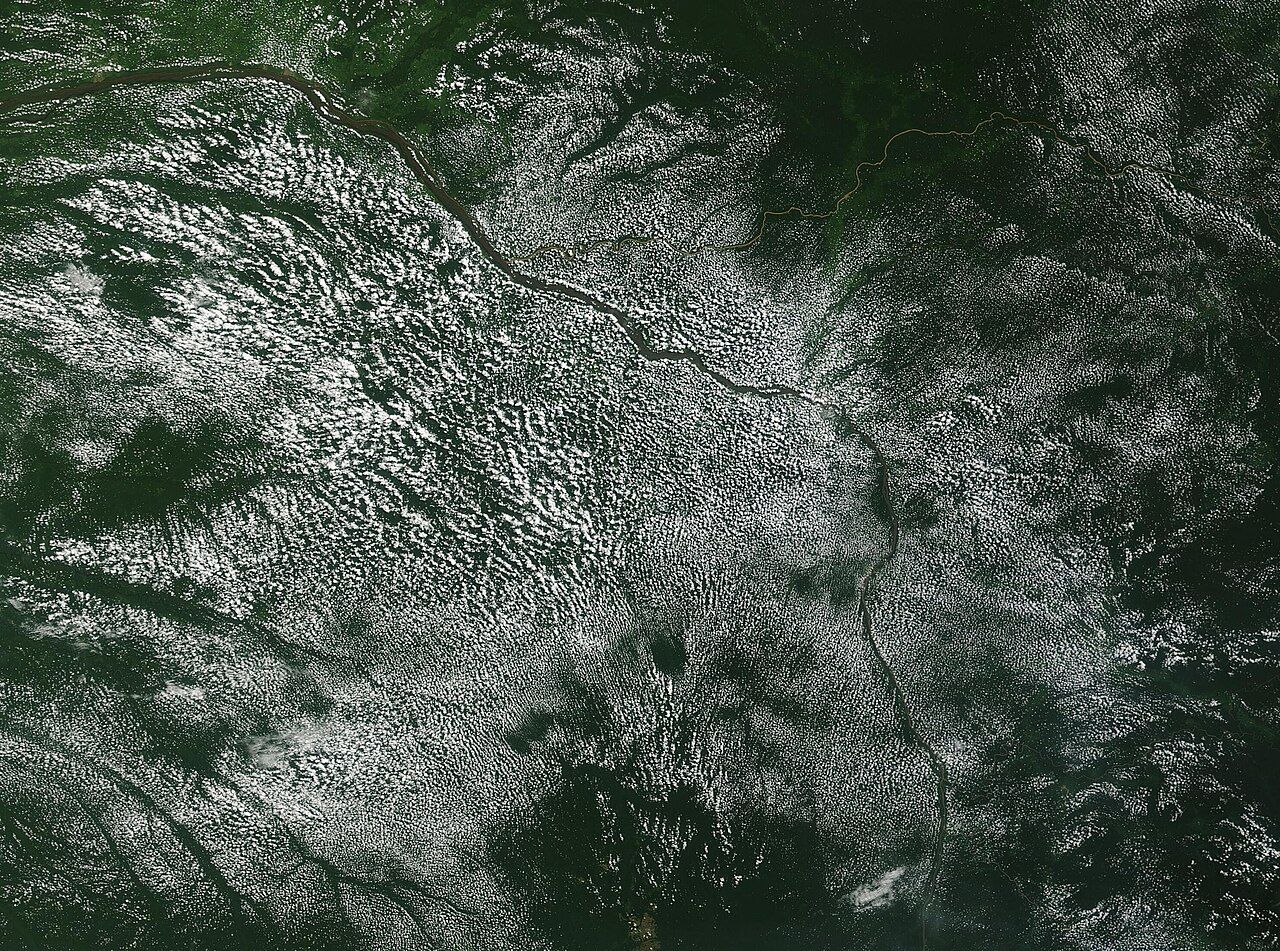
Satellite view of scattered small cumulus clouds over the forests of the Congo Basin, taken by the MODIS instrument.
Small fair-weather clouds over the Congo Basin, seen by NASA's MODIS. Used in: Aviator (weather), Explorer (weather), Kindergarten (weather), Pilot (weather), ENV, ESC, SKY.Credit: MODIS Land Rapid Response Team, NASA GSFC, via Wikimedia Commons. Licence: Public domain. Source.
Mount Kilimanjaro seen from Amboseli in Kenya: the snow-capped summit rises above a thick band of cloud over a dry brown savanna with a few flat-topped acacia trees in the foreground.
Mount Kilimanjaro seen across the savanna from Amboseli, Kenya. Used in: Explorer (geography), GEO.Credit: Sergey Pesterev, via Wikimedia Commons. Licence: CC BY-SA 4.0. Source.
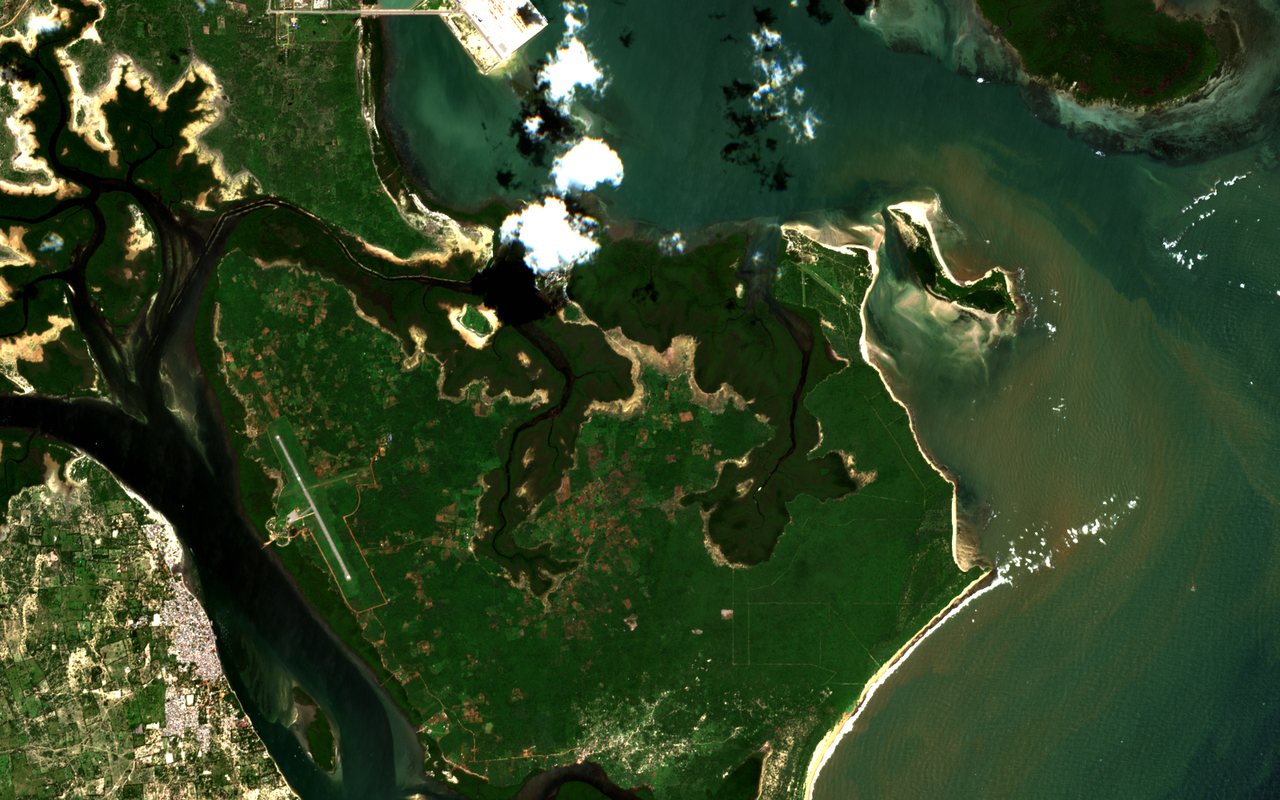
Sentinel-2 true-colour view of the Lamu archipelago in Kenya taken on 27 June 2026: green mangrove and scrub land on Manda Island with the grey strip of the Manda airstrip, the dense roofs of Lamu town across a narrow channel at the lower left, and brown sediment in the shallow water to the east and south.
Lamu: Manda Island and Lamu town from Sentinel-2, 27 June 2026. Used in: Aviator (maps), Pilot (maps), EOG.Credit: Contains modified Copernicus Sentinel-2 data 2026, processed by ESA; served by Element84 Earth Search on AWS Open Data. Licence: Copernicus Sentinel data, free, full and open access (EU Regulation 1159/2013); attribution required. Source.
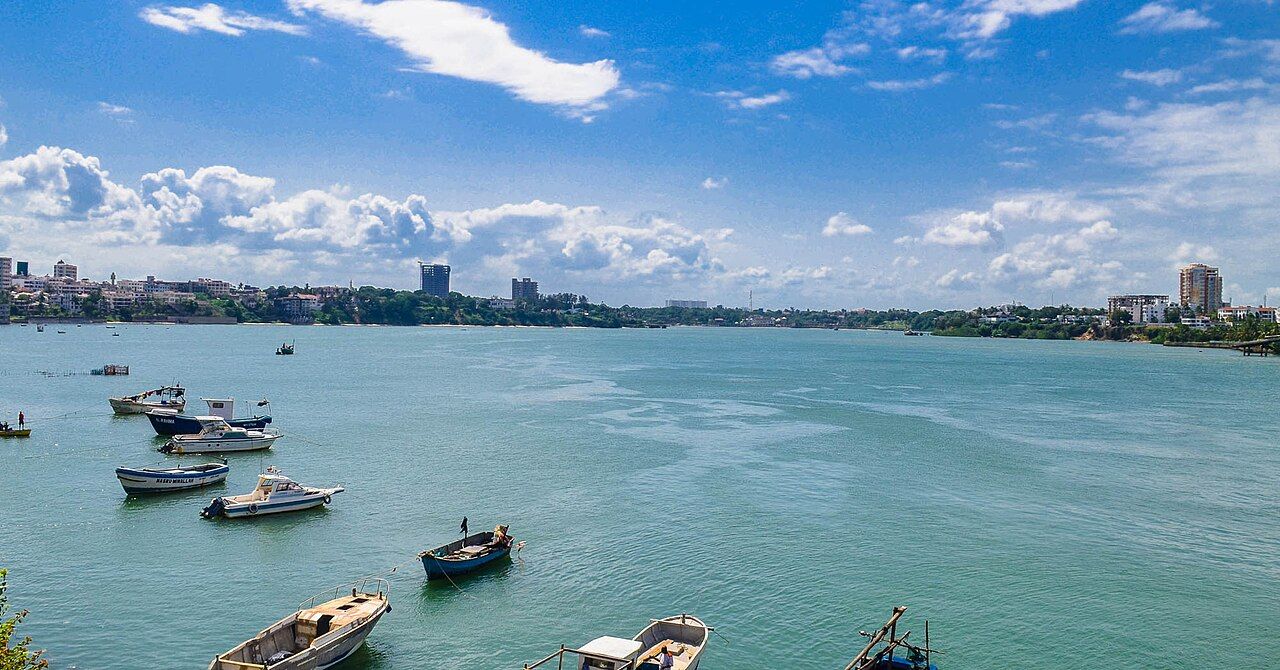
Calm blue water off Mombasa on the Kenyan coast with several small wooden boats at anchor and the low skyline of the city along the far shore under a bright sky with white clouds.
Boats at anchor in the waters off Mombasa, Kenya, with the city on the far shore. Used in: Aviator (logistics), Engineer (logistics), LOG, SST.Credit: Erasmus Kamugisha, via Wikimedia Commons. Licence: CC BY-SA 4.0. Source.
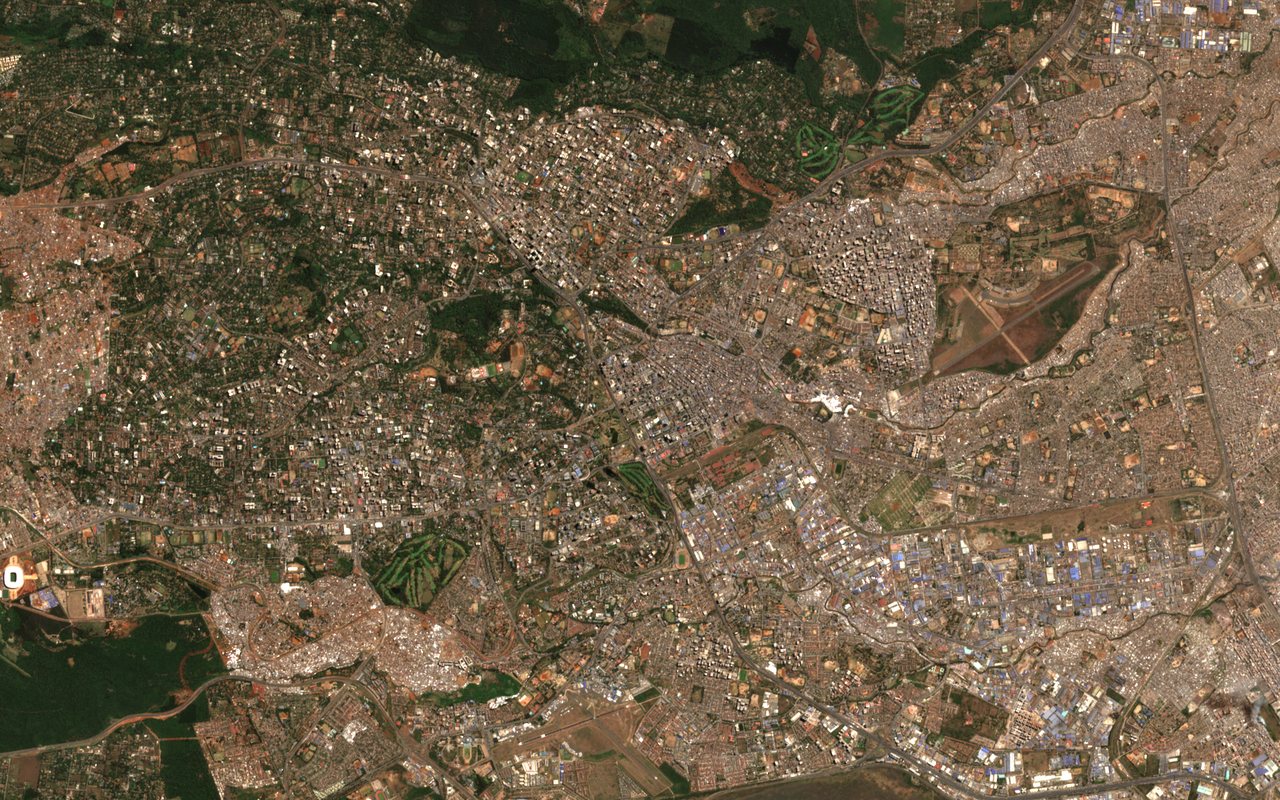
Sentinel-2 true-colour view of central Nairobi, Kenya, on 12 August 2026: dense neighbourhoods, green parks and golf courses, the runways of Wilson Airport near the bottom of the frame and large warehouse roofs. The sky is clear.
Nairobi from Sentinel-2, 12 August 2026. Used in: Kindergarten (maps), University (satellites), DAT, EOG.Credit: Contains modified Copernicus Sentinel-2 data 2026, processed by ESA; served by Element84 Earth Search on AWS Open Data. Licence: Copernicus Sentinel data, free, full and open access (EU Regulation 1159/2013); attribution required. Source.
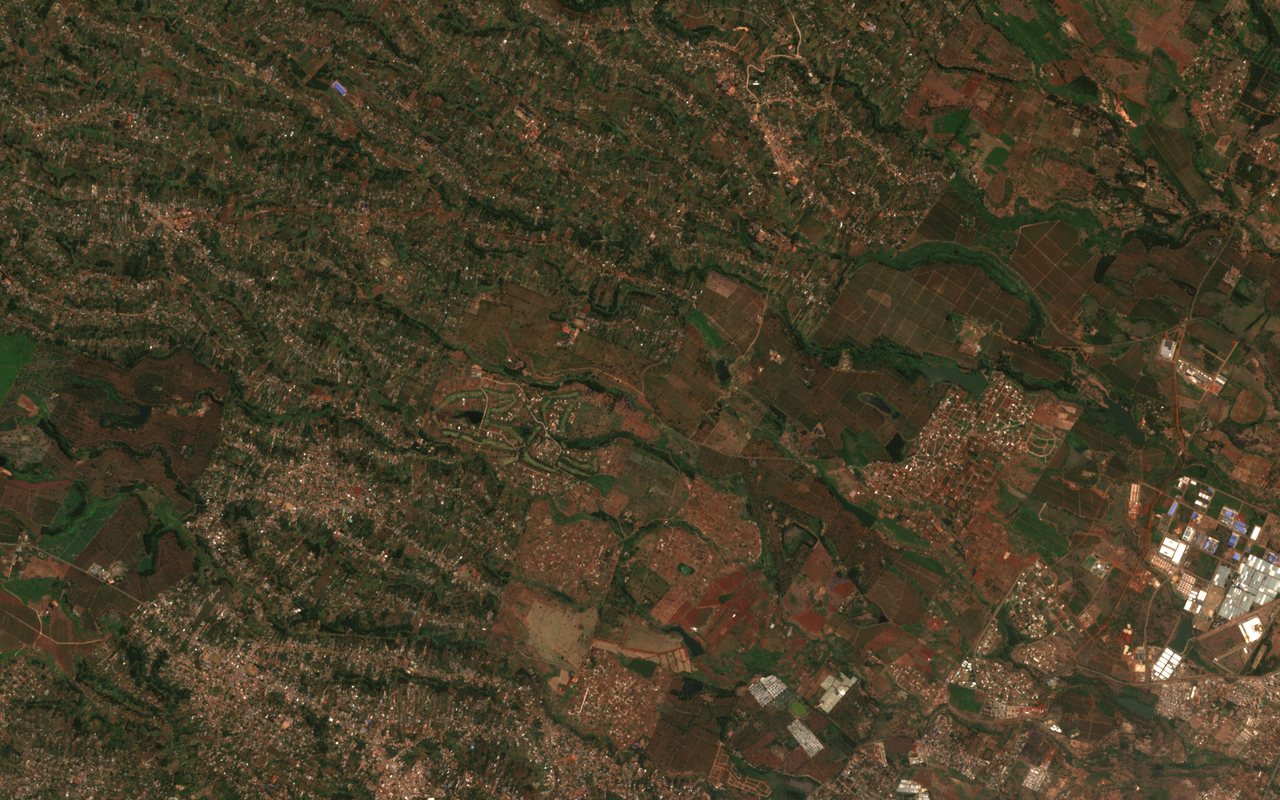
Sentinel-2 true-colour view of land north of Nairobi on 12 August 2026: a mix of housing, rectangular farm plots in green and brown, and a cluster of large white and blue warehouse roofs.
Farm plots and settlement north of Nairobi, Sentinel-2, 12 August 2026. Used in: AGR, AGS.Credit: Contains modified Copernicus Sentinel-2 data 2026, processed by ESA; served by Element84 Earth Search on AWS Open Data. Licence: Copernicus Sentinel data, free, full and open access (EU Regulation 1159/2013); attribution required. Source.
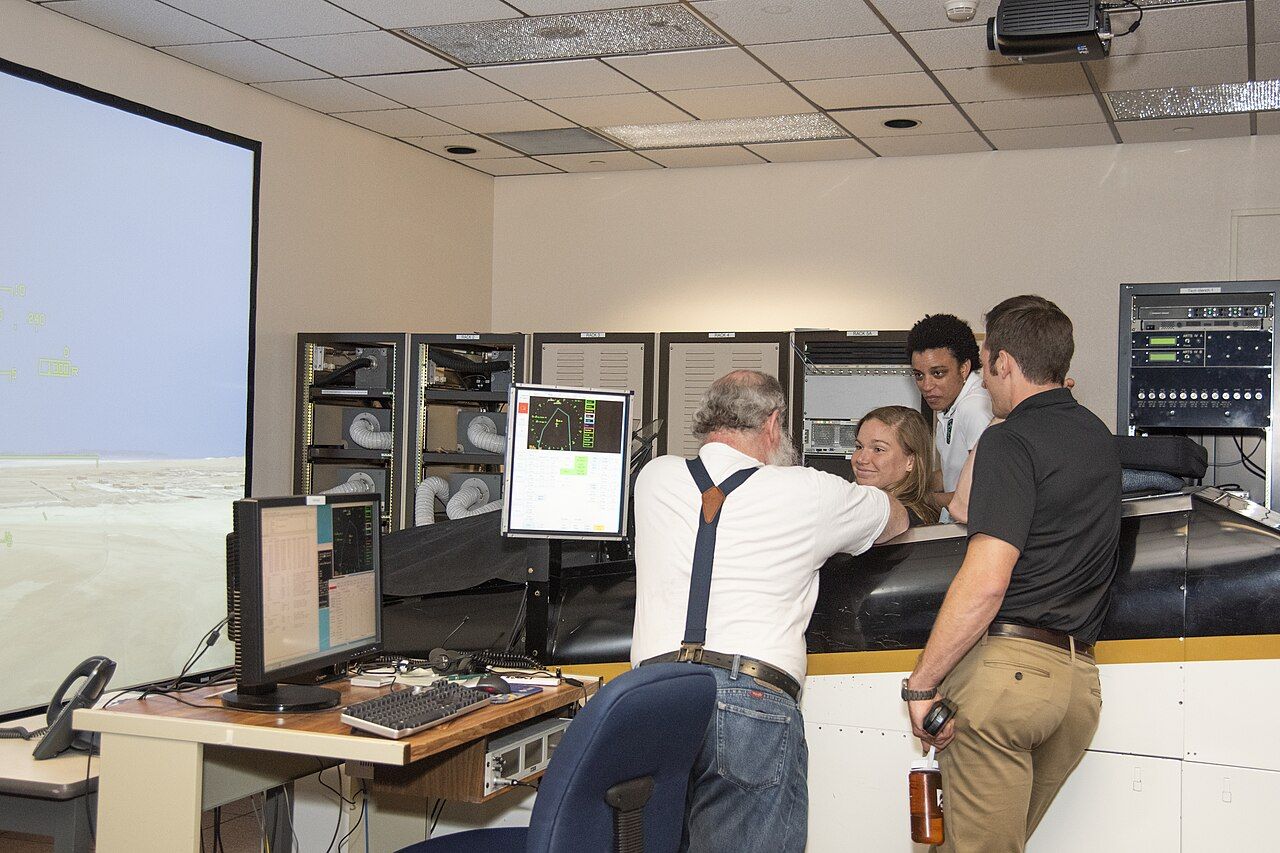
Astronauts seated at a NASA F-18 flight simulator at the Armstrong Flight Research Center.
A NASA flight simulator, shown to illustrate simulation training. Not an Africa Flying device. Used in: AVT.Credit: NASA Armstrong Flight Research Center / NASA/Lauren Hughes, via Wikimedia Commons. Licence: Public domain. Source.
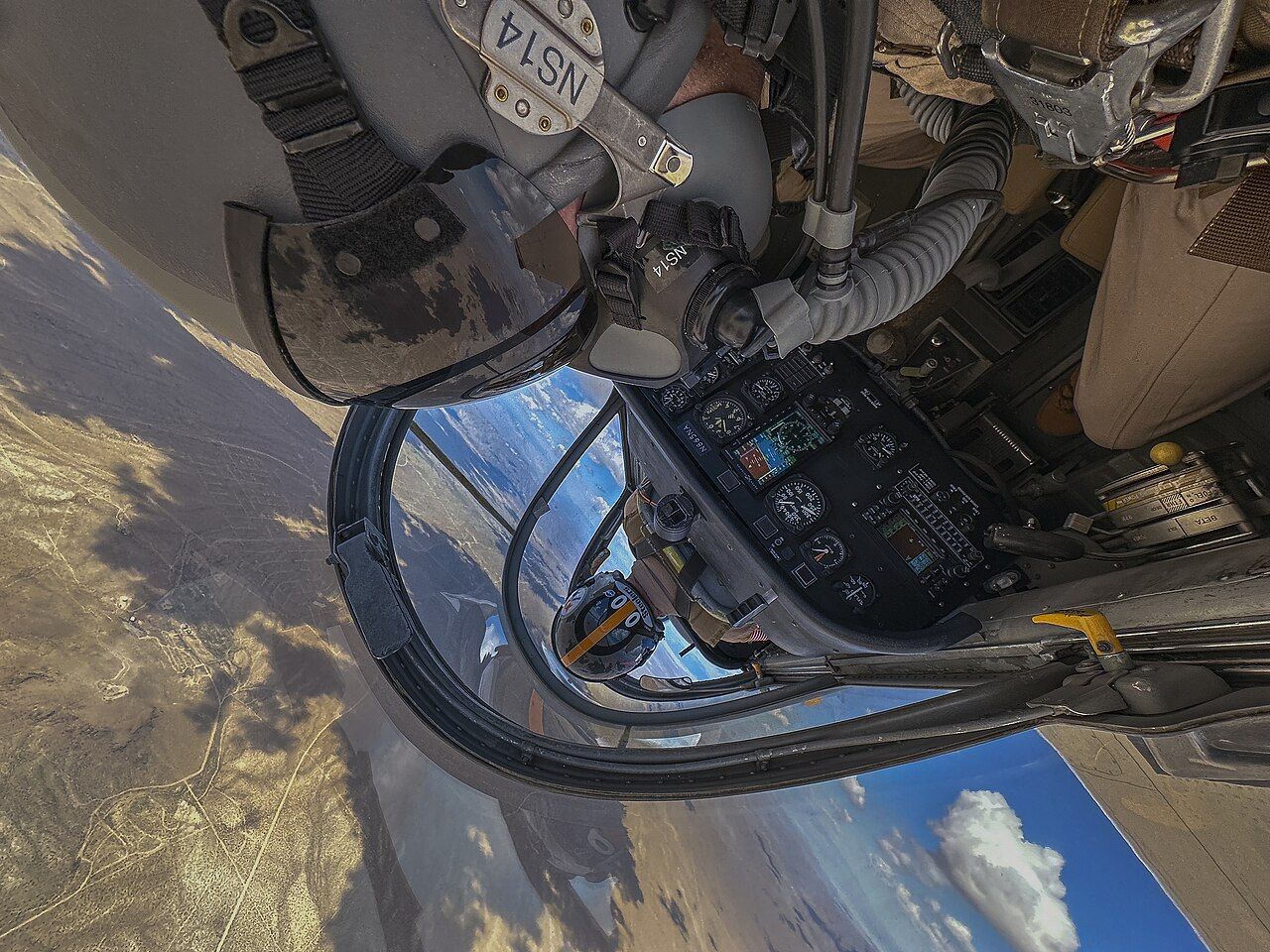
A NASA Armstrong Flight Research Center T-34C training aircraft in flight against the sky.
A NASA research aircraft in flight. It is a NASA photograph, not an Africa Flying vehicle. Used in: Engineer (flight), Explorer (flight), Kindergarten (flight), AER, AVT, SKY.Credit: NASA Headquarters / NASA/Jim Ross, via Wikimedia Commons. Licence: Public domain. Source.
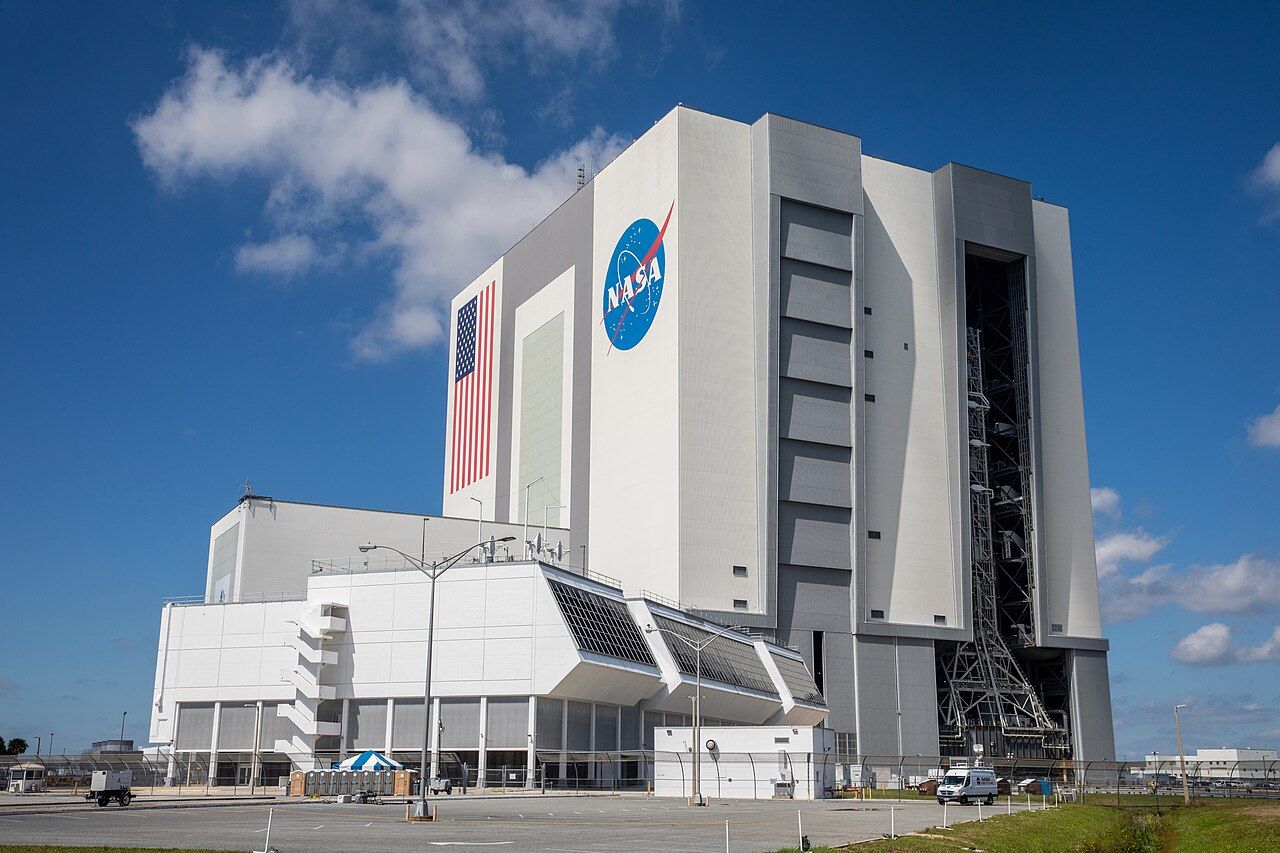
The large Vehicle Assembly Building at NASA's Kennedy Space Center in Florida.
NASA's Vehicle Assembly Building. An example of a space-vehicle assembly hall, not an Africa Flying facility. Used in: SPC.Credit: Kim Shiflett, via Wikimedia Commons. Licence: Public domain. Source.
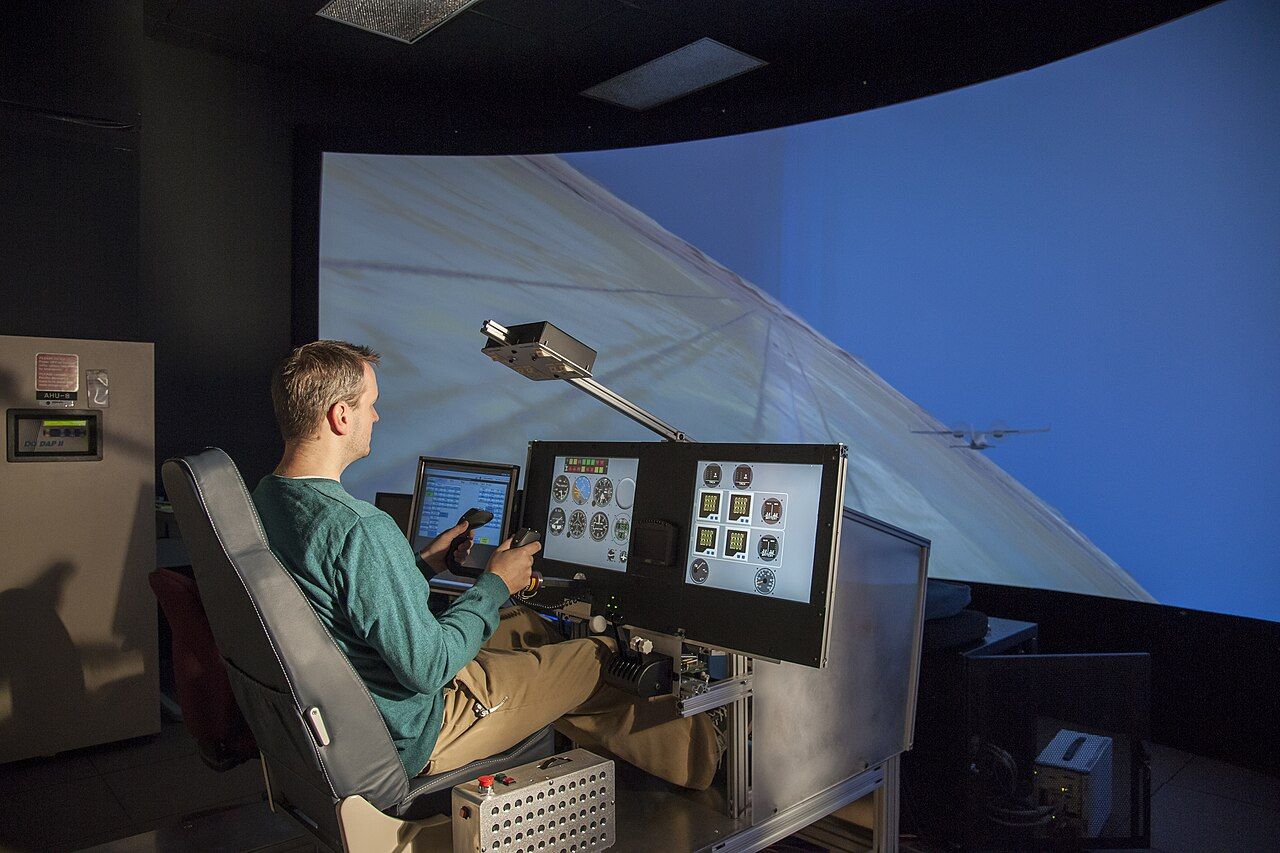
A pilot seated at the screens of a NASA flight simulator for the electric X-57 research aircraft.
A NASA flight simulator, shown to illustrate simulation training. Not an Africa Flying device. Used in: University (flight).Credit: NASA Armstrong Flight Research Center / Lauren Hughes, via Wikimedia Commons. Licence: Public domain. Source.
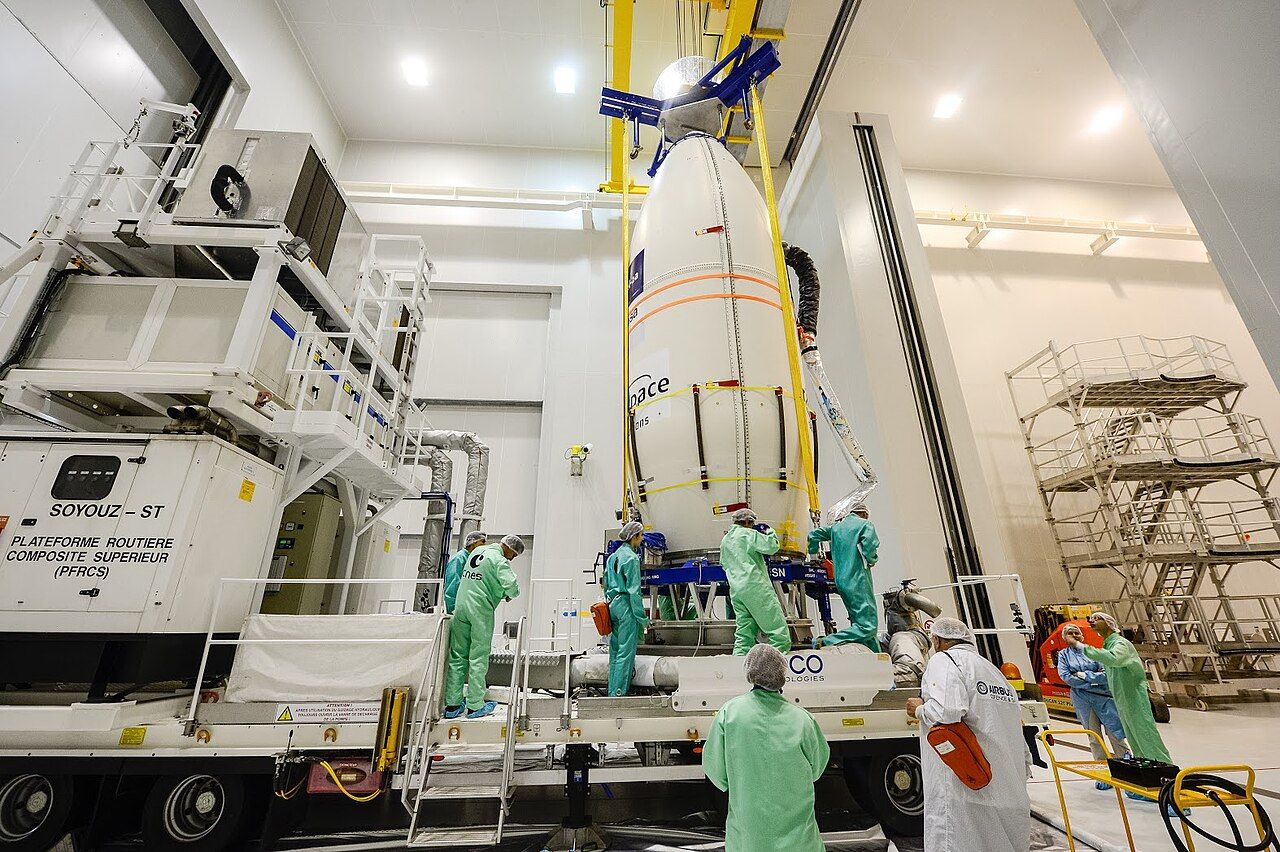
The Sentinel-2A satellite inside its white launch fairing on a transport platform, with technicians in cleanroom suits around it.
The Sentinel-2A satellite, inside its launch fairing, being prepared for launch. Used in: Engineer (satellites), SPC.Credit: ESA_events, via Wikimedia Commons. Licence: CC BY-SA 2.0. Source.
0Learners enrolled
21Designed missions
5Designed quizzes
18Designed badges

What we are building (in development)

Six bands, from first steps to university. Kindergarten, Explorer, Aviator, Engineer, Pilot and University. Younger bands get shorter exams and more time per question; older bands get more questions and a higher pass mark.

A draft curriculum. A proposal built on Kenya’s 8-4-4 system with CBC noted per year, covering 18 school and university years, 31 subjects and 7 career pathways, such as aviation and aerospace, earth observation, health and medical logistics, and space systems. It is still a draft waiting for the founder’s approval.

Study first, then the exam. Each lesson needs real reading time and a short checkpoint before the exam unlocks. Exams are timed, questions and answer orders are shuffled, and results never reveal the correct answers. Passed missions come back for short spaced reviews a few days later.

Fair play. Three failed attempts lock an exam for 24 hours; failing again after a lock means redoing the study module. Suspiciously fast answering holds a pass for a human check instead of awarding it straight away.

An SI teacher, with humans in charge. A rule-based SI teacher pre-checks questions, spots learners who are struggling and answers questions only from lessons the learner may already read, never from exams. If it cannot find the answer, it passes the question to a human teacher. Only a human principal can approve content, and SI recommendations on progress need a staff countersign.

Pending teacher review. Until invited teachers and reviewers have approved a module, learners see the label “Pending teacher review”.

When can I use it?

Education is waitlist-only: the app is not open yet and nothing is on sale. Email hello@africaflying.com to join the waitlist; we will write when modules open.